
L'espérant (2025)
Multimedia Project for Voice, Theater Performance, Electronics, Sensors, and Visuals
Duration: approx. 14 minutes
Premiere: June 2025, ZfGM Festival, Leipzig
Upcoming Performance: 2026 Lange Nacht Festival, Zurich
Composition: Kefan Chen
Installation & Electronics: Kefan Chen
Performance: Rino Murakami
Visual Filming: Bonsai Peng
Visual Design: Bonsai Peng, Kefan Chen, Katharina Peterka
Lighting Design: Bonsai Peng, Kefan Chen
Video Post-production: Katharina Peterka, Kefan Chen
Concert Photography: Wenjie Hu, Line de Kaenel
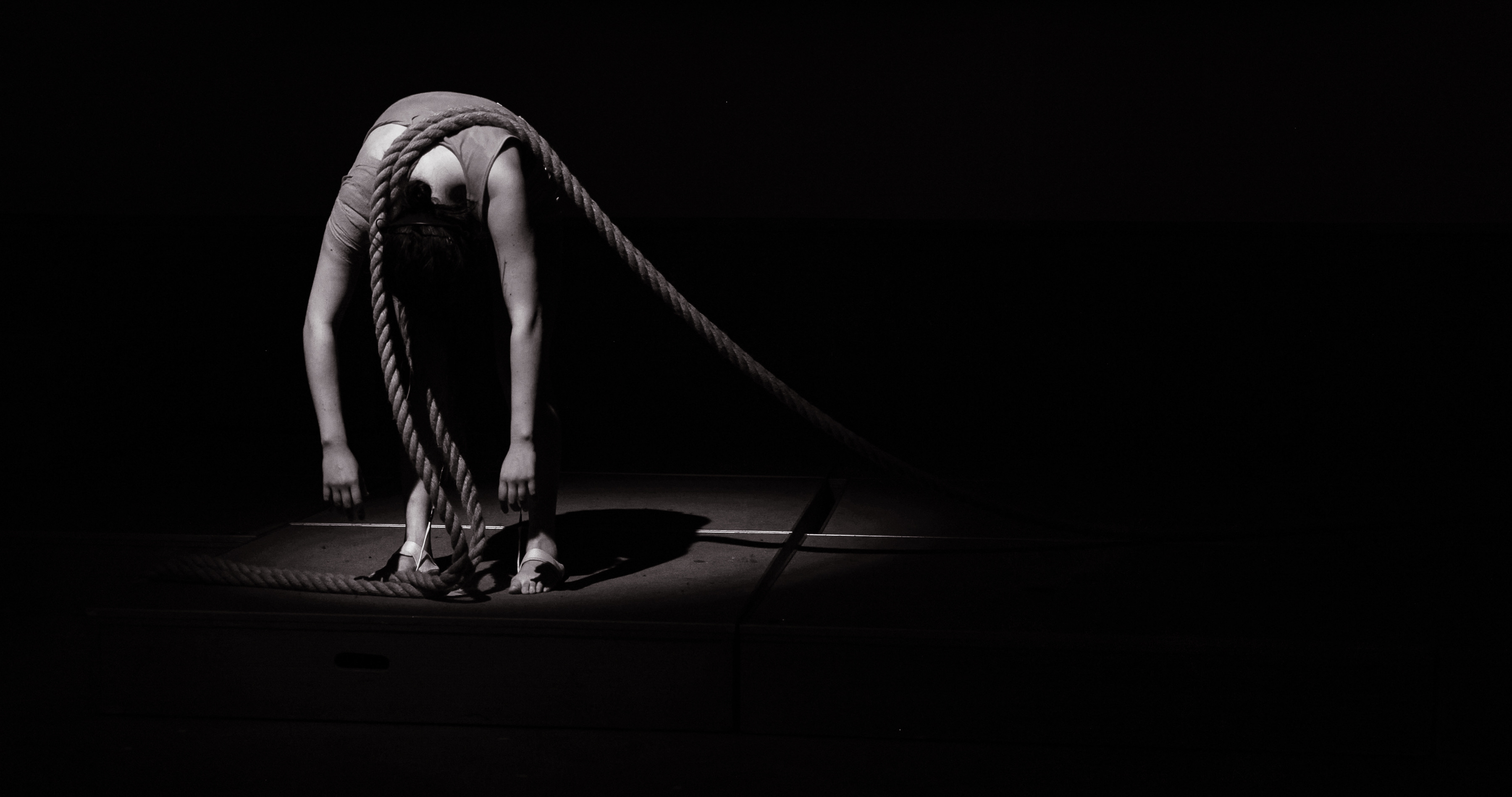
Photo by Bongsai Peng
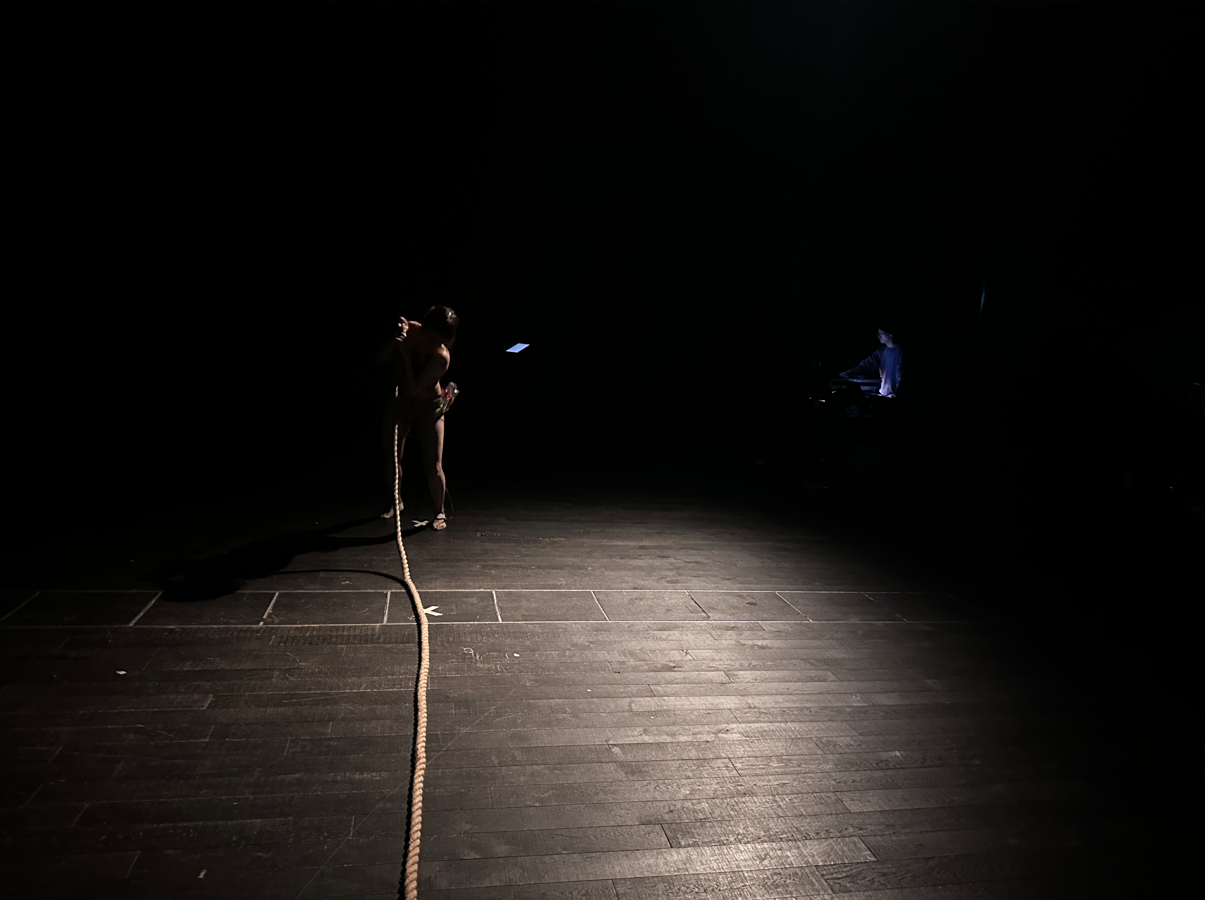
Photo by Wenjie Hu
About
The project is inspired by a historical reality in southern China. In mountain regions where roads were nearly impossible to build,
rivers became the only transport routes. The strong currents and steep banks made river hauling extremely dangerous;
massive cargo boats could only progress when dragged manually along the banks by dozens of workers. A single misstep could easily cost someone their life.
Among these laborers were women who undertook the same back-breaking and perilous work in order to support their families. Exposed to relentless heat, working bare-chested, they pulled the heavy ropes with strength born out of a need for survival. Yet, these women have largely been erased from historical memory. Their labor, endurance, and presence went unacknowledged because the strength of women was undervalued and unrecorded.
L’espérant centers on these forgotten female workers to bring their long-buried memories back into the light.
Note: This project is part of my series on Arduino-based works utilizing sensor interaction. Another work, Plant, employed an Arduino Uno with light, temperature, and humidity sensors to create a plant-connected, interactive sound system that generated musical changes in an algorithmic patch based on environmental variations.
Link: https://youtu.be/jQH0vAf6Mjw?si=e05Co0H6qTDXCsGu
System Setup
The work uses a custom-designed interactive structure that connects: FSR sensors → ESP32 → WiFi Router → Max/MSP → QLC+ (DMX) → strobelight
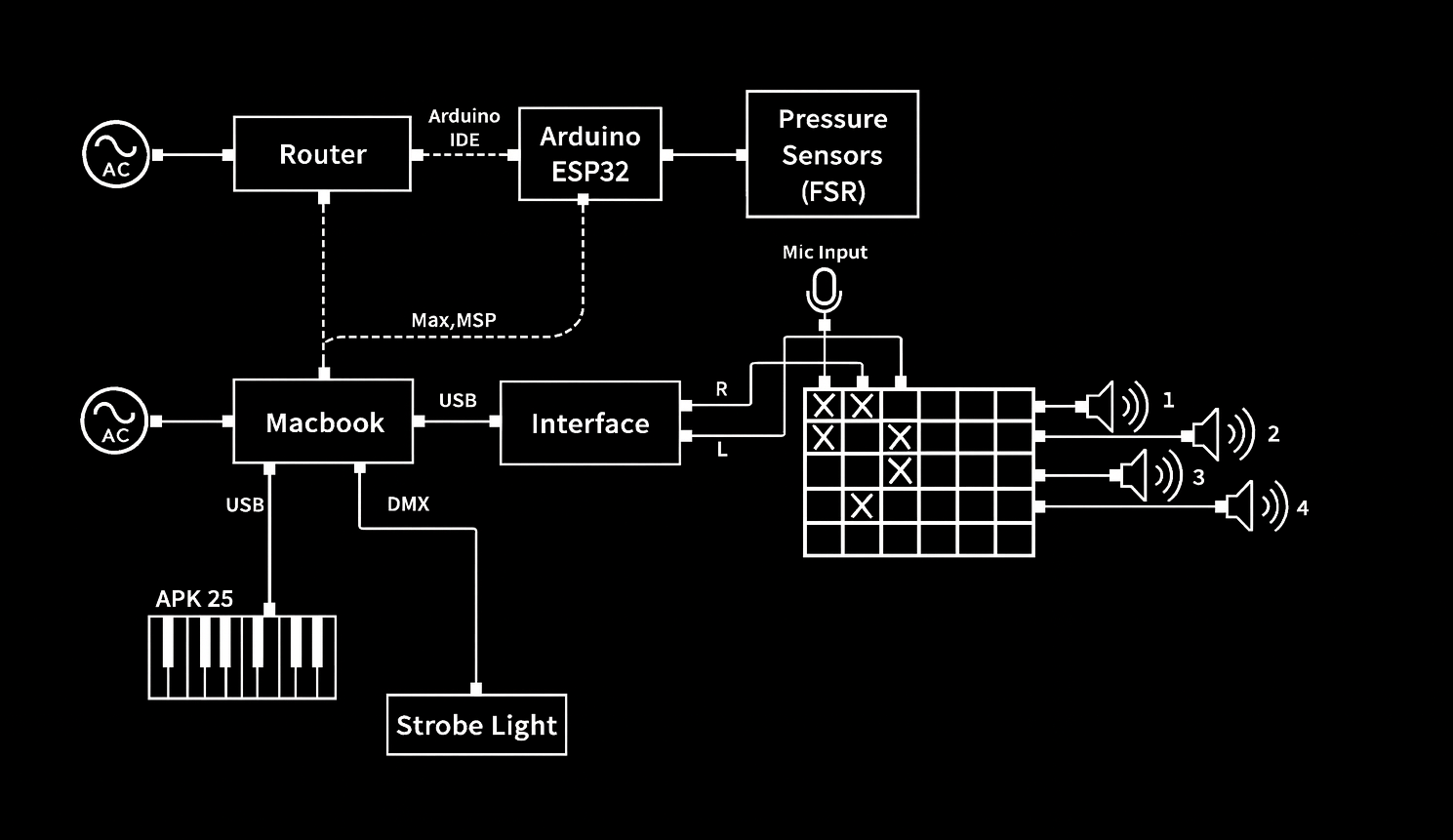
Sensors and Data Transmission
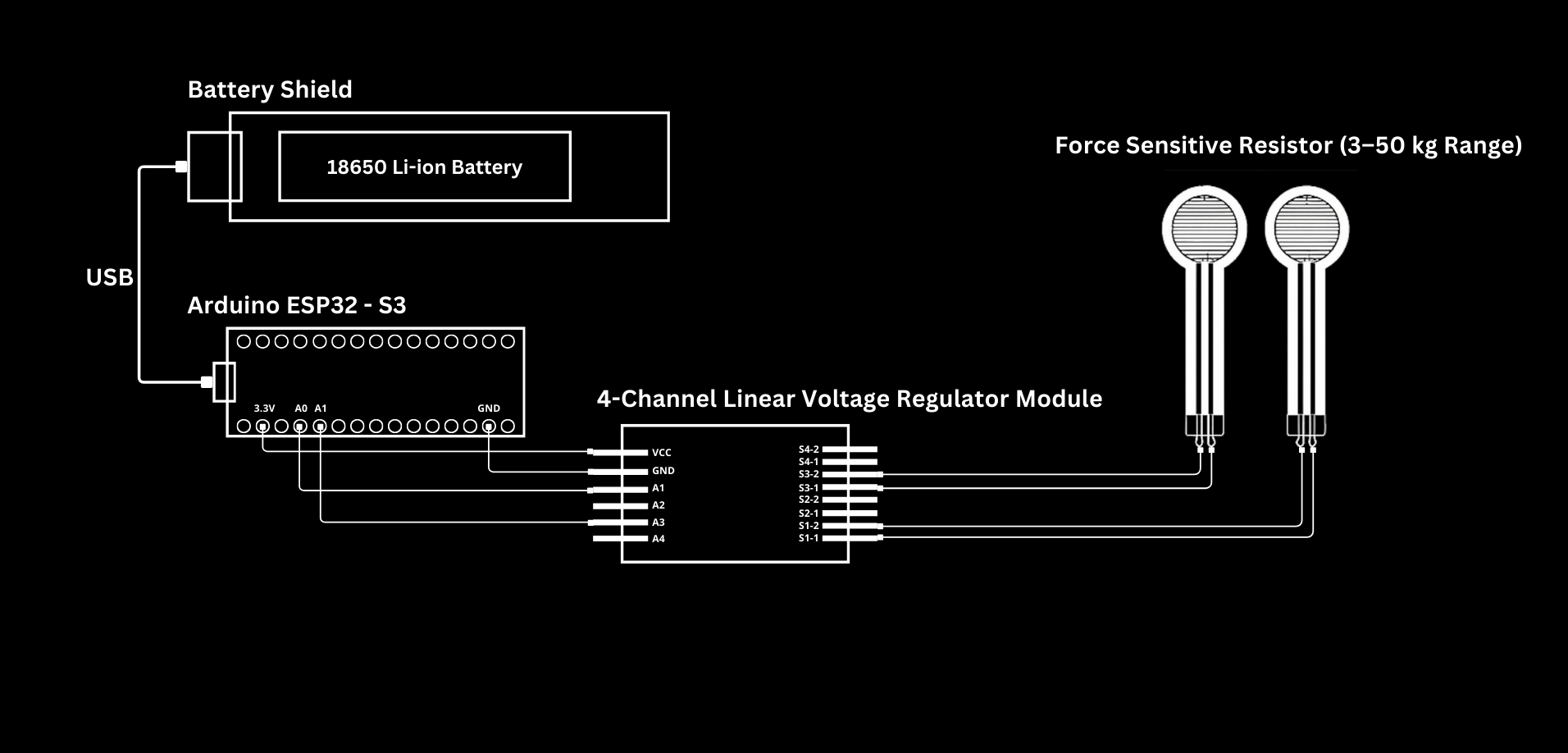
Two FSR pressure sensors are positioned under the performer’s feet to capture footsteps. Both sensors are soldered to an Arduino ESP32 microcontroller, forming a wireless sensing module.